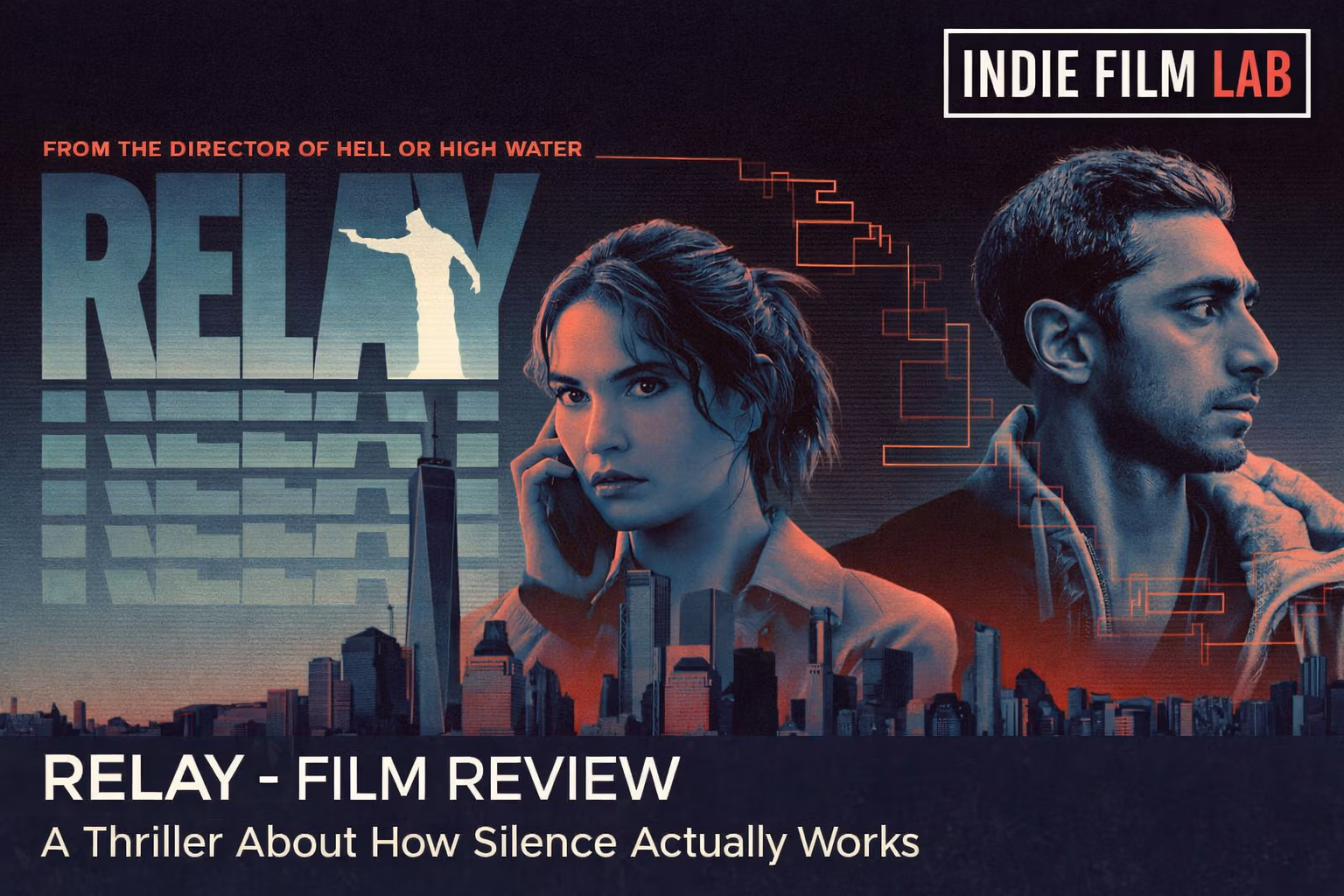
Relay is a restrained, procedural corporate thriller released in 2024, directed by David Mackenzie and written by Justin Piasecki. The film stars Riz Ahmed, Lily James, and Sam Worthington.
On paper, it resembles a familiar genre setup: a shadowy intermediary, a powerful corporation, sensitive information that could cause serious damage if released. But Relay quickly separates itself from standard whistleblower thrillers by refusing to center exposure as victory.
Instead, it focuses on intermediation — the people who live between truth and power, whose job is not to fix injustice but to manage it.
Rather than leaning on action set pieces, the film builds tension through phone relays, logistics, public spaces, misdirection, and time. The danger isn’t chaos — it’s procedure. And the scariest moments come not from violence, but from how calmly the system responds when challenged.
Logline:
A professional intermediary who brokers silence between corporations and people who know too much believes anonymity is his greatest protection—until a routine negotiation begins to expose the system he depends on and the cost of staying invisible.
Some films announce themselves with volume. Relay does not. It slips in quietly, almost anonymously — which feels intentional, considering what the movie is actually about. Directed with restraint and confidence, Relay plays like a thriller that’s less interested in adrenaline and more interested in systems: how power moves, how silence is negotiated, and how truth is managed once it becomes inconvenient.
At first glance, it looks like familiar territory — corporate wrongdoing, a fixer operating in the shadows, high-stakes information changing hands. But Relay isn’t chasing spectacle or moral grandstanding. It’s patient. Procedural. Observant. The tension comes not from explosions or chases, but from rules, routines, and the slow realization that every system has already accounted for resistance.
Watching it as a filmmaker, what stood out immediately was the confidence in the storytelling. The film trusts silence. It trusts behavior over exposition. It trusts the audience to keep up. And in an era where thrillers often confuse noise for urgency, that choice alone makes Relay worth paying attention to. This isn’t a movie about heroes. It’s a movie about mechanisms.
What Relay Is Not…
Relay is not a whistleblower fantasy.
It’s not a movie where the truth explodes into daylight, the bad actors are publicly shamed, and justice arrives right on time. If you’re expecting courtroom speeches, heroic leaks, or a clean moral victory, this isn’t that film — and it’s intentionally not trying to be.
Relay is also not an action thriller.
There are no elaborate chases, no glossy set pieces, no operatic violence. When danger shows up, it’s abrupt, uncomfortable, and procedural. The movie understands that real power doesn’t rely on spectacle. It relies on patience, paperwork, and people following instructions.
It’s not a comfort watch. The film doesn’t reassure you that doing the right thing guarantees safety or recognition. It doesn’t reward good intentions with applause. In fact, it quietly suggests the opposite: that proximity to truth often comes with isolation, risk, and loss.
Relay is not interested in simplifying morality. There are no pure heroes here, no cartoon villains twirling mustaches. Everyone operates inside systems that shape their choices, limit their options, and quietly extract a cost. The film refuses to flatten that complexity into slogans.
And it’s definitely not a movie about “winning.” Institutions don’t collapse. Corporations don’t burn. The system doesn’t fall. What changes is smaller and harder to celebrate — awareness, accountability, and the stripping away of illusions. If Relay frustrates you, that’s probably the point. It isn’t here to entertain your sense of justice. It’s here to interrogate it.
Why Relay Hits Me as a Storyteller
Riz Ahmed’s Ash isn’t a hero or a rebel. He’s a technician. His world is rules, protocols, and leverage. Anonymity is armor. Distance is safety. One copy of the truth is currency, not justice. What really landed for me is how the film treats procedure as drama. Phone calls. Waiting. Deadlines. Missed connections. These aren’t filler — they are the action. Relay understands that modern power doesn’t need to shout. It just needs time, compliance, and plausible deniability.
Ash’s backstory — surfaced quietly through AA meetings and restrained confession — gives the film its emotional gravity. He’s someone who once believed in doing the right thing, paid for it, and rebuilt his life around never being that exposed again. As a filmmaker, that felt painfully familiar. How many of us recalibrate our ethics just enough to stay working? To stay safe? To keep going?
The tension doesn’t come from twists. It comes from watching rules bend. From realizing that intelligence and competence don’t grant immunity — they make you more valuable to control. The film’s restraint is its strength. It doesn’t explain itself. It doesn’t reassure. It lets discomfort sit in the frame. That’s confidence — and it’s rare. The ending offers no catharsis. No clean takedown. Institutions remain intact. Consequences fall where they usually do: on the individuals closest to the truth. That’s not a failure of storytelling. That’s the point.
Why This Matters Right Now
We’re living in a moment where information is everywhere, attention is fragmented, and accountability feels increasingly abstract. Truth doesn’t disappear — it just gets delayed, diluted, or buried under process. Relay understands that systems aren’t afraid of exposure anymore. They’ve adapted to it.
For filmmakers, that’s an important shift to recognize. Stories about corruption don’t challenge power simply by existing. Systems are prepared for outrage. They’re prepared for leaks. What they’re most threatened by are people who understand how the machinery actually works — and refuse to let it operate unnoticed. Relay isn’t a call to arms. It’s a mirror. It asks what we’re willing to trade for safety, for access, for the ability to keep working. And whether neutrality, chosen often enough, becomes its own form of complicity. It’s not comforting. But it’s precise. And those are the stories that tend to last.
What I’d Steal as an Indie Filmmaker
-
Procedure as tension You don’t need chases. You need rules, deadlines, and consequences.
-
Silence as confidence Trust the audience. Let scenes breathe.
-
Everyday locations, elevated stakes Apartments, transit hubs, offices. Context creates danger, not scale.
-
Character through behavior We learn who Ash is by what he avoids and which rules he breaks.
-
Endings with nerve Honest endings don’t always feel good. They just feel true.
How I’d Produce This on an Indie Budget
I’d Strip Relay down and it’s an indie filmmaker’s dream. Just a Few locations. Dialogue-driven tension. Sound design doing heavy lifting. Performance over coverage. Implication over exposition. This is a film where money doesn’t buy power — clarity does. You don’t need to make a small movie feel big. You need to make it feel inevitable.


Leave a Reply