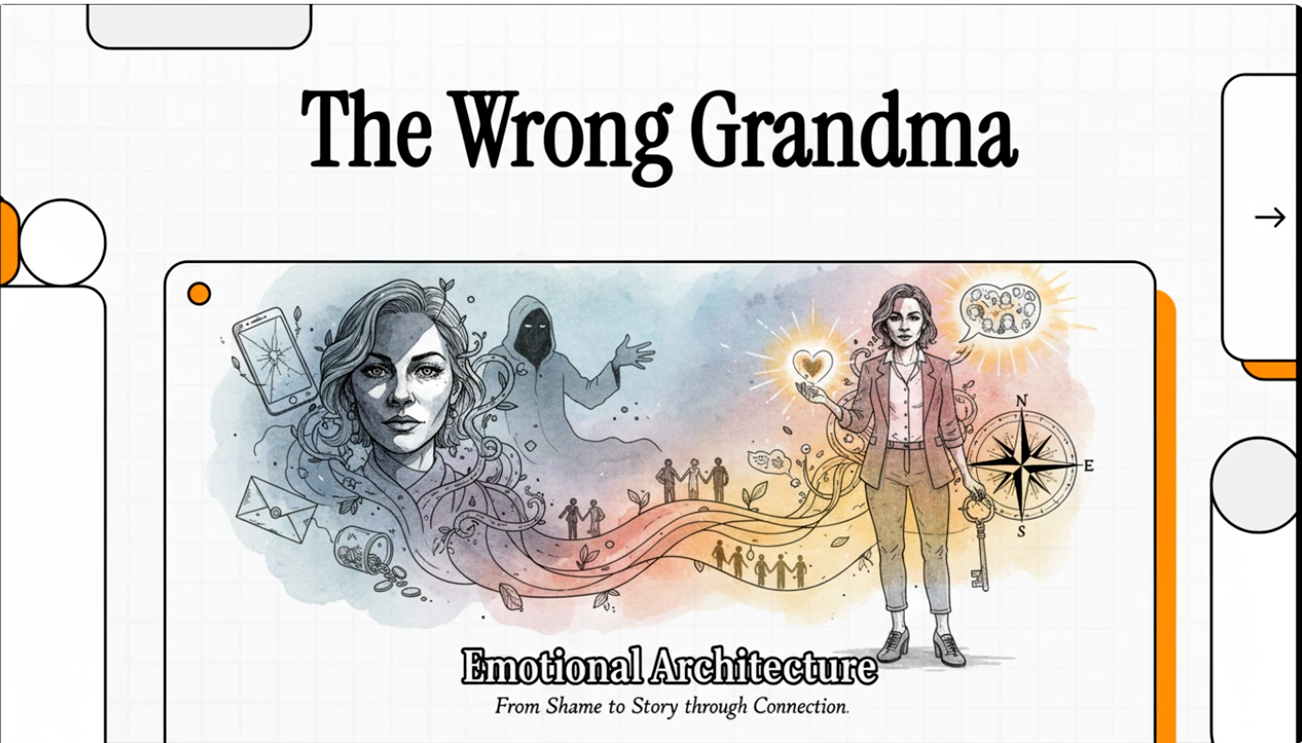
In narrative craft, dialogue is often mistaken for mere conversation. However, as the short film “The Wrong Grandma” demonstrates, meticulously crafted dialogue functions as the primary engine of plot, character revelation, and thematic resonance. This analysis will deconstruct key lines from the film to show the aspiring storyteller how words become action—revealing character, driving the plot, and establishing the profound emotional stakes. The film’s core themes of shame, isolation, and the power of connection are brought to life through the precise, powerful, and transformative words spoken by its characters.
——————————————————————————–
1. The Confession: Dialogue that Reveals Vulnerability
The initial dialogue between Susan and her granddaughter, Emma, establishes the story’s emotional foundation. These early lines don’t just explain the situation; they invite us into Susan’s private world of shame, making her struggle tangible and deeply personal.
SUSAN
If I don’t do this today… I won’t get my life back.
• Plot Significance: This powerful opening line immediately establishes Susan’s core motivation and the story’s high stakes. It frames the impending phone call not as a simple task, but as a desperate, all-or-nothing fight for her very identity.
• Character Insight: The line reveals Susan’s internal state—a fragile combination of immense fear and profound resolve. It tells the audience she has reached a critical breaking point and cannot continue living in the shadow of her shame.
SUSAN
...and put them back. Because I couldn’t afford color anymore.
• Plot Significance: This detail powerfully illustrates the true depth of the scam’s financial and emotional devastation. It translates a vague financial loss into a concrete, heartbreaking image of deprivation.
• Character Insight: This is a masterclass in using a concrete sensory detail (“color”) to articulate an abstract emotional state (shame, loss of dignity). The confession isn’t just about money; it’s about the loss of simple joys and beauty. The phrase “couldn’t afford color” encapsulates the shame that has isolated her with more power than a paragraph of exposition ever could.
EMMA
Grandma...you weren’t stupid. You were targeted.
• Plot Significance: Emma’s words mark the introduction of the story’s central theme: connection is power. This line is the first crucial step in reframing the narrative, shifting the focus from Susan’s self-blame to the scammer’s calculated crime.
• Character Insight: This line establishes Emma as the story’s supportive anchor. She doesn’t just offer sympathy; she provides a new, empowering perspective that is essential for Susan to begin her journey of reclamation.
Learning Narrative: With the emotional stakes set and her shame finally shared, Susan gathers the strength to move from victim to protagonist, leading to the pivotal phone call.
——————————————————————————–
2. The Confrontation: Dialogue as a Shifting Power Dynamic
The phone call with the scammer operates as a dialectic, a verbal thesis-antithesis struggle where each line is a calculated attempt to seize narrative control. The entire conflict unfolds through dialogue, with each exchange functioning as a strategic move that either reinforces the scammer’s dominance or allows Susan to reclaim her power.
The Scammer’s Mask:
Speaker: The Scammer
Analysis: This is a critical “mask drop” moment. The scammer’s practiced, professional warmth evaporates, revealing the cold, predatory worldview that fuels his actions. This line confirms for both the audience and Susan the true, cruel nature of the person she is confronting.
Susan Reclaims Her Story:
Speaker: Susan
Analysis: This is Susan’s turning point. She moves beyond the quantifiable financial loss to articulate the true, human cost of his crime. By stating this directly to him, she begins to reclaim the power and dignity that were stolen from her, refusing to let him define the terms of her suffering.
The Scammer’s Counter-Gambit:
Speaker: The Scammer
Analysis: This is not an apology; it is a tactical shift from overt cruelty to a feigned, world-weary rationalization. The line is designed to make Susan feel complicit (“You didn’t [hang up]”). It is the scammer’s final manipulative gambit, showing how predators pivot from intimidation to false intimacy to keep their victims off-balance and mired in self-doubt.
The Bluff and The Backup:
Speakers: Susan, Emma
Analysis: This sequence is a brilliant piece of character-driven plot. Susan’s bluff demonstrates her newfound cleverness. Emma’s panicked whisper adds a layer of humor and realism, grounding the high-stakes moment. Finally, Emma’s furious follow-up shows her fierce loyalty and brilliantly turns her seemingly humble job into a source of intimidating, unorthodox strength, landing a real emotional blow.
Learning Narrative: Having chipped away at the scammer’s confidence, Susan prepares to deliver the final line that will shatter his composure and end the confrontation.
——————————————————————————–
3. The Final Strike: Dialogue as a Weapon
The story’s climax is delivered not as a single knockout punch, but as a precise, two-part maneuver. The first line is the weapon; the second, delivered into the silence of victory, is the reclamation.
The Weapon
SUSAN
They’re tracing this call.
Analysis: This is the story’s kill shot. It is a simple, declarative sentence that transforms the abstract threat of “law enforcement” into an immediate and terrifying reality for the scammer. The script brilliantly uses sound—the knock, the yelling, the crash—to confirm the absolute power of her words to manifest real-world consequences. This line is aimed directly at her opponent, and it lands with devastating effect.
The Victory Speech
SUSAN
Turns out... you picked the wrong grandma.
Analysis: This line is delivered after the call has ended and the threat is neutralized. It is not a final taunt to her defeated foe; it is a statement of self-reclamation spoken for herself and Emma. It masterfully reclaims the scammer’s earlier insult (“sweet little old Grandma”) and turns it into a statement of formidable strength. It serves as the perfect thematic bookend to her journey, marking the moment she fully accepts her own power.
Learning Narrative: With the battle won not by force but by words, the final lines of the story focus on the first steps of healing.
——————————————————————————–
4. The Resolution: Dialogue of Healing and Hope
After the high-stakes confrontation, the film concludes with a quiet exchange. These final lines carry immense emotional weight, signaling the beginning of Susan’s recovery and reinforcing the story’s central message.
EMMA
Then we take it back. One letter at a time.
SUSAN
(smiles, faint but real)
One truth at a time.
• Speakers: Emma, Susan
• Synthesized Analysis: This final exchange beautifully encapsulates the film’s message about recovery. Emma’s line is practical, supportive, and grounded, breaking down the overwhelming task of rebuilding a life into a single, manageable action (“one letter at a time”). Susan’s gentle correction—”one truth at a time”—demonstrates her profound character growth. She is no longer just dealing with bills; she is rebuilding her life on a new foundation of honesty and self-worth, starting with the truth she finally told. It is a hopeful, earned, and deeply resonant ending.
——————————————————————————–
Key Takeaways for Storytellers
This analysis of “The Wrong Grandma” offers several powerful lessons on crafting impactful dialogue.
1. Reveal Character Through Diction and Rhythm A character’s true nature is shown not just in what they say, but how they say it. The contrast between Susan’s hesitant, whispered confessions (“couldn’t afford color”) and the scammer’s calculated shifts from slick jargon to blunt cruelty defines them more than any descriptive paragraph could.
2. Drive Plot with Dialogue Every key plot point in this story is triggered by a line of dialogue. The confession initiates the action, the confrontation shifts the power dynamic, the bluff creates a turning point, and the final declarative sentence resolves the central conflict.
3. Articulate Stakes Through Character Voice Dialogue makes the audience feel the stakes on a personal level. Hearing Susan articulate the loss of her “peace” and “dignity” is far more powerful and emotionally resonant than simply being told she lost a sum of money.
4. Make Dialogue the Climax In a story like this, the dialogue is the climax. The final confrontation is not a physical fight but a battle of words, will, and perspective. This demonstrates the essence of cinematic tension in character-driven drama, where the internal journey is externalized not through spectacle, but through the crucible of verbal conflict. A well-crafted line can be the most powerful weapon in a writer’s arsenal.
Leave a Reply